
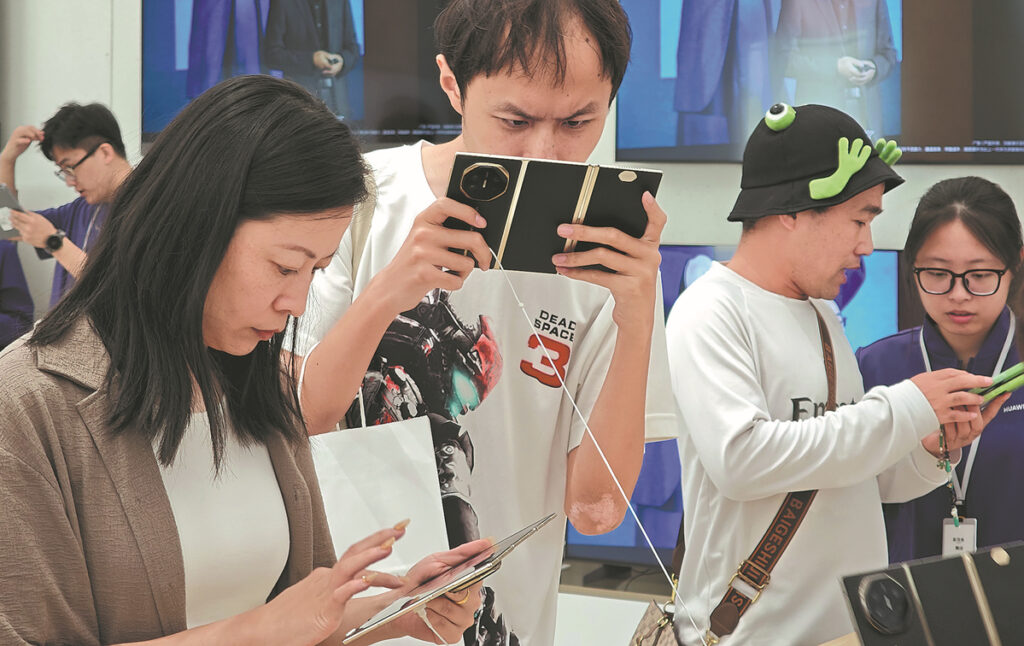

Huawei has once again shaken up the global smartphone scene with the launch of its latest flagship foldable device — the Huawei Mate XTs. As the world’s first commercially available tri-fold smartphone, this futuristic device is designed to push the limits of mobile technology, combining powerful hardware with next-level software.
Unveiled in China, the Mate XTs isn’t just an incremental upgrade. It represents Huawei’s resilience in chip innovation, its growing dominance in the foldable market, and its determination to deliver an unparalleled user experience.
Huawei’s Confidence in Chip Technology: Kirin 9020
Unlike past launches, this event was particularly significant because it marked the return of Huawei publicly announcing its in-house chipset. The Huawei Mate XTs runs on the Kirin 9020 chip, developed under Huawei’s HiSilicon brand.
- 🚀 Performance Leap: Huawei claims a 36% performance boost compared to its predecessor.
- ⚡ Architecture Advancements: Despite global pressure on advanced node access, the company has cleverly improved chip output through design and architecture.
- 🔐 Self-Sufficiency Signal: By highlighting this chip, Huawei is signaling its strength in semiconductor independence, a critical move in today’s global tech landscape.
This bold step reflects Huawei’s growing confidence, marking a turning point not just for the company but also for China’s domestic semiconductor and smartphone industries.

HarmonyOS 5: A Platform Built for the Future
The Mate XTs comes powered by HarmonyOS 5, Huawei’s own operating system that’s now deeply integrated across smartphones, tablets, wearables, and even IoT devices.
HarmonyOS 5 enables:
- 🖥️ PC-Level Applications: Running applications similar to a personal computer with multi-window functionality.
- ⚡ Seamless Ecosystem: Smooth interaction across Huawei laptops, tablets, and smart devices.
- 📱 Improved Multitasking: Effortless navigation between apps, much like working on a desktop interface.
This integration brings an entirely new dimension to mobile productivity — something that business professionals and tech enthusiasts will find especially useful.
Design & Display: The Tri-Fold Revolution
What sets the Huawei Mate XTs apart from every other foldable device is its tri-fold display, a leap forward from the traditional dual-fold designs.
- 📐 The tri-fold mechanism expands the display from a compact smartphone to a nearly tablet-sized canvas, and further towards a mini-laptop feel for multi-tasking.
- 🌈 Flexible OLED technology makes the large screen durable and visually stunning.
- 👌 Foldability reduces bulkiness while improving convenience for both work and entertainment.
Huawei has already set industry standards in foldable devices, holding an impressive 75% market share in China’s foldable smartphone sector in early 2025. The Mate XTs further strengthens this dominance.
Camera and Imaging Upgrades
Huawei is renowned for its leadership in smartphone imaging, and the Mate XTs continues this legacy. While the company hasn’t revealed every detail, here’s what’s expected:
- 📸 Enhanced AI imaging powered by the new Kirin 9020’s improved image signal processor (ISP).
- 🌃 Superior low-light performance and dynamic range.
- 🎥 Advanced video stabilization catered to professional creators.
This positions the Mate XTs as a powerful tool not just for everyday users but also for content creators, vloggers, and professionals looking for PC-quality tools in a compact form factor.

Market Impact: Huawei Leading the Foldable Race
According to IDC, Huawei shipped 3.74 million foldables in the first half of 2025, grabbing a staggering 75% share in China’s foldable smartphone market.
With competition heating up:
- Samsung is preparing for its new Galaxy Z Fold lineup.
- Motorola and Google are exploring flexible designs.
- Apple is rumored to release its first foldable iPhone in 2026.
But Huawei has a clear head start. Its constant innovation and affordability strategy (lowering the entry price by 2,000 yuan compared to its first tri-fold) shows confidence in making foldables mainstream.
Price and Availability
The Huawei Mate XTs starts at 17,999 yuan ($2,480) — surprisingly cheaper than its predecessor.
By lowering the price point while making performance leaps, Huawei is signaling a move to expand accessibility for advanced devices while still maintaining its premium status.
Pros and Cons of Huawei Mate XTs
✅ Pros
- 🚀 First Tri-Fold Smartphone: Unique design for multi-tasking and entertainment.
- ⚡ Kirin 9020 Performance: 36% faster with power-efficient architecture.
- 🖥️ PC-Level Multi-Window Features thanks to HarmonyOS 5.
- 📸 Improved Cameras with AI-driven enhancements.
- 📊 Lower Price Than Predecessor, making it more competitive.
- 🌍 HarmonyOS Ecosystem integration across multiple devices.
❌ Cons
- 💰 High Price Tag: Still costly compared to non-foldable flagships.
- ❗ Durability Concerns: Tri-fold mechanism may face wear-and-tear over time.
- 📶 Limited Global Availability: Initially designed for the Chinese market.
- 🕹️ App Compatibility: Some third-party apps may not yet optimize well for tri-fold screens.
Conclusion: Is the Huawei Mate XTs the Future of Smartphones?
The Huawei Mate XTs isn’t just another smartphone launch — it is a bold statement from Huawei. By introducing the world’s first tri-fold device powered by the in-house Kirin 9020 chip and HarmonyOS 5, Huawei proves it is capable of combining innovation, self-sufficiency, and ecosystem strength.
With a lower price tag than its predecessor and features comparable to a desktop PC, the Mate XTs is setting a new benchmark for productivity and creativity in mobiles. While global users might have to wait longer for its accessibility, the device clearly establishes Huawei as the front-runner in foldable technology.


