
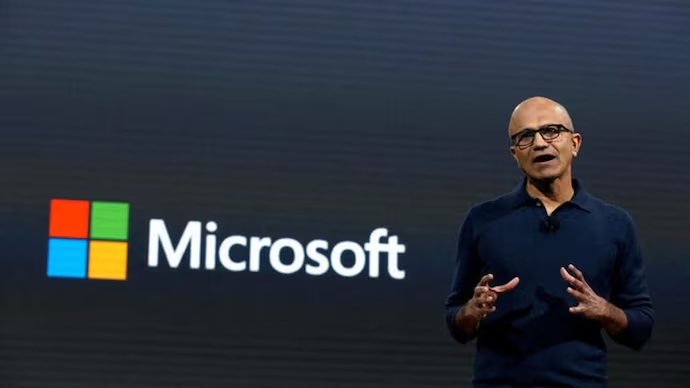

Microsoft CEO Satya Nadella Issues AI Warning
In the rapidly evolving world of artificial intelligence, even giant corporations are not immune to disruption. Microsoft’s CEO Satya Nadella recently made a strikingly candid admission that has caught the tech industry’s attention worldwide. Speaking at an internal employee town hall, Nadella confessed that despite Microsoft’s current status as a global leader in cloud computing, AI, and software, the company could lose relevance if it fails to adapt to the sweeping changes ushered in by artificial intelligence.
Nadella’s remarks serve as both a cautionary warning for Microsoft and a reality check for the entire tech industry. His reflection highlighted that even the biggest and most profitable ventures might not be sustainable in the future if the company resists constant transformation.
The Burden of Innovation and Survival
During the meeting, Nadella responded to an employee’s question about the workplace culture at Microsoft. The inquiry quickly evolved into a deeper conversation about corporate fragility, reminding employees and industry observers that in technology, dominance today does not guarantee relevance tomorrow.
“Some of the biggest businesses we’ve built might not be as relevant going forward,” Nadella admitted, signaling that AI’s momentum could shake the very foundations of Microsoft’s leading products, such as Windows, Office, Azure, and even its dominance in enterprise solutions.
The underlying fear is clear: innovation must never stall. Artificial intelligence is moving at lightning speed, pushing companies to either adopt new ways or succumb to irrelevance. Microsoft may lead in AI-assisted platforms like GitHub Copilot, Microsoft Copilot, and its partnership with OpenAI, but Nadella knows that competitors are aggressively advancing too.
A Lesson From Digital Equipment Corporation (DEC)
To illustrate his point, Nadella recalled the story of Digital Equipment Corporation (DEC), a once-mighty computing giant from the 1970s. DEC was a leader in minicomputers but failed to adapt to new technologies such as the Reduced Instruction Set Computing (RISC) architecture. This resistance to change sealed its fate, leading to its eventual downfall.
“I’m haunted by one particular one called DEC,” Nadella said, drawing on his personal connection with the company. His first computer was a DEC VAX, and he once dreamed of working there. However, DEC’s demise offered opportunities for competitors, including Microsoft, which later benefited by hiring talented engineers from DEC’s laid-off workforce.
By using this historical parallel, Nadella underscored how even giants that seem invincible can disappear if they lose the ability to adapt to technological disruptions. His implication was unmistakable: if Microsoft wants to avoid DEC’s fate, it must remain agile in the AI era.
Internal Culture and Employee Concerns
Interestingly, Nadella’s cautionary statement was triggered not by a question about technology itself, but by a critique of corporate culture. A UK-based employee noted that Microsoft felt “markedly different, colder, more rigid, and lacking in empathy.” Instead of dismissing this statement, Nadella acknowledged it.
“I deeply appreciate the question and the sentiment behind it. I take it as feedback for me and the leadership team, because at the end of the day, we can do better, and we will do better,” he said.
This acknowledgement highlights another critical factor for survival—culture. Nadella emphasized that Microsoft cannot thrive in the AI-driven marketplace if it neglects its workforce. Employees must feel valued, supported, and heard. After all, innovation is not only about technology, but also about the people who build it.
Balancing AI Disruption With Human Values
Nadella’s words bring forth a leadership philosophy that balances technology with empathy. The AI revolution is often framed as a path dominated by automation and disruption, but Microsoft’s CEO has made it clear that empathy within the organization is just as important as technological advancements.
The AI transformation may redefine products, operations, and services, but without human trust and creativity, no tech company can sustain its innovation streak. Nadella highlighted that while Microsoft must focus on winning the AI race, it must equally nurture a corporate culture that empowers people to succeed.
What Does This Mean for Microsoft’s Future?
The implications of Nadella’s warning are profound. It reflects the pressure on Microsoft to stay competitive against rivals like Google, Apple, and Amazon, all of whom are racing to integrate AI into their products and ecosystems.
Historically, Microsoft has survived multiple waves of innovation by pivoting at the right time—from software licensing dominance in the 1990s to cloud computing leadership with Azure in the 2010s. Today, AI represents the next leap. Nadella’s candid comments suggest that Microsoft cannot take its position for granted, no matter how strong its balance sheet or market share looks today.
Key Takeaways From Nadella’s AI Warning
- Microsoft acknowledges its vulnerability: No company is too big to fail, especially in tech.
- Historical lessons matter: The fall of DEC serves as a warning that success can evaporate if innovation lags.
- Culture is critical: Employee feedback about Microsoft’s rigidity points to the need for fostering empathy and flexibility.
- AI is both risk and opportunity: While AI can disrupt Microsoft’s existing businesses, it also presents new avenues for growth, innovation, and leadership.
The Broader Impact on the Tech Industry
Nadella’s AI warning is not confined to Microsoft. His reflections echo a broader challenge faced across the tech industry: how can companies balance rapid innovation with corporate sustainability?
From startups to global leaders, every company is now grappling with AI’s disruptive potential. Just as cloud computing reshaped IT in the last decade, AI is set to redefine industries in ways not yet fully understood. Nadella’s candidness stands as both a rallying cry and a reminder that complacency is the greatest threat.

Conclusion
Satya Nadella’s AI warning is more than just corporate self-reflection—it is a wake-up call for the entire technology ecosystem. By openly admitting that Microsoft could lose relevance if it fails to adapt, Nadella underscores the fragile nature of success in the tech world. His reference to DEC is a reminder that no company, no matter how powerful, is immune to disruption.
At the same time, Nadella’s acknowledgment of employee concerns highlights the importance of culture, empathy, and leadership in sustaining innovation. For Microsoft, the future depends not only on its breakthroughs in AI but also on its ability to maintain trust and inclusivity within its workforce.
FAQs About Satya Nadella’s AI Warning
What did Satya Nadella say about Microsoft’s future?
Satya Nadella admitted that some of Microsoft’s biggest businesses might lose relevance in the future due to the disruptive power of artificial intelligence. He emphasized that the company must stay agile and adapt to survive the AI revolution.
Why did Satya Nadella mention Digital Equipment Corporation (DEC)?
Nadella mentioned DEC as a cautionary tale. Once a leading computer company, DEC failed to adapt to emerging technologies and eventually collapsed. He used it as an example to show that even successful companies can vanish if they refuse to evolve.
How is Microsoft adapting to AI disruptions?
Microsoft is investing heavily in AI technologies through products like Microsoft Copilot, GitHub Copilot, and its partnership with OpenAI. The company has integrated AI tools into Office, Azure cloud services, and Bing search to stay competitive.
What concerns did Microsoft employees raise during the town hall?
An employee from the UK highlighted that Microsoft’s corporate culture has become “colder, more rigid, and lacking in empathy.” Nadella acknowledged this concern and promised to improve leadership practices and workplace culture.
Does Satya Nadella believe Microsoft is at risk of failing?
While Nadella did not say Microsoft is in immediate danger, he admitted that irrelevance is always a risk in the fast-changing tech world. His message was clear: survival depends on continuous innovation and the ability to adapt to disruptions.
What is the key takeaway from Nadella’s warning?
The main lesson is that even global tech leaders must remain vigilant and adaptable. Microsoft’s future depends not only on its AI advancements but also on building a strong, empathic corporate culture that supports long-term growth.