


Introduction
With the UK’s Online Safety Act now in full swing, platforms like Reddit, Discord, and even Instagram are rolling out strict Death Stranding Age Verification. Designed to protect underage users from adult content, these checks often involve facial recognition or ID verification systems. But in an unexpected twist, gamers have discovered a bizarre loophole—using Death Stranding’s in-game photo mode to fool face scanning technology.
Yes, you read that right. The ultra-realistic graphics of Kojima Productions’ masterpiece, Death Stranding, have not only stunned players visually but are now being exploited to bypass government-mandated age verification systems.
Let’s break down how this gaming loophole works, why it’s going viral, and what it means for digital privacy and online safety.
👁️🗨️ What is the UK Online Safety Act?
The UK Online Safety Act, which took effect on July 25, 2025, is a landmark piece of legislation aimed at making the internet safer—particularly for children. Platforms must now ensure users accessing adult content are genuinely over 18.
This is done through:
- ID verification (e.g., passport or driver’s license)
- Facial age estimation using AI-powered video selfies
Several services have implemented these checks, including:
- Reddit (using Persona)
- Discord (using k-ID)
- Instagram (partnering with Yoti)
While noble in its intent, critics argue the implementation is clumsy and raises privacy concerns. And now, it’s also proving to be shockingly easy to bypass.
🕹️ The Death Stranding Hack: How It Works
A viral post by X (formerly Twitter) user Dany Sterkhov revealed the unexpected exploit. By using Death Stranding’s photo mode, users can control Sam Bridges (played by Norman Reedus) and manipulate his facial expressions to mimic the actions required by face scan tools.
These tools usually ask you to:
- Look left/right
- Blink
- Smile or open your mouth
- Tilt your head
Thanks to the game’s hyper-realistic character modeling, players can make Sam do all of this and more using the photo mode on PC or console. Then, they simply point their phone camera at the screen during the age check, and voilà—the system is fooled into thinking it’s a real person.
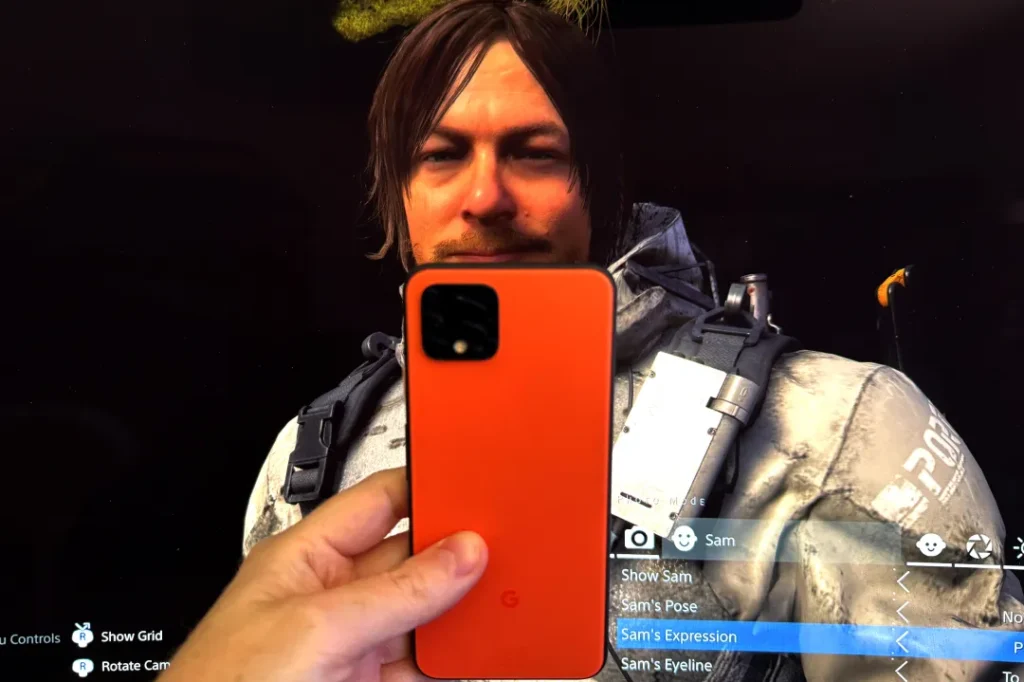
🧪 Real Tests: Bypassing Persona and k-ID
Several users, including journalists at PC Gamer, tested this method with success:
✅ Reddit’s Persona Verification
- Asked user to rotate their face
- Sam’s head was panned in-game
- Persona accepted the “face” as legitimate
✅ Discord’s k-ID Verification
- Asked user to open/close mouth
- Sam’s expressions changed via photo mode
- Verification passed in seconds
❌ Instagram’s Yoti Verification
- The more advanced AI detected the fake
- Age estimation failed using virtual face
This shows that while some systems like Yoti are robust, others are vulnerable to sophisticated fakes—even if they’re from a video game.
🤯 Why Is This Bypass So Effective?
Death Stranding’s visual fidelity is so high that Sam Bridges’ face mimics human behavior down to tiny details—eye movement, skin texture, dynamic lighting, and mouth motion. Facial recognition software relying on pattern detection and motion cues can easily be tricked if the subject follows the prompts in real time.
Additionally:
- Photo mode allows full manual control of expressions
- Sam reacts realistically to camera angles and lighting
- There’s no obvious distinction from a real person in a low-res video selfie
🔒 Privacy Concerns: Why People Are Doing This
Beyond the novelty, many users have real reasons to avoid traditional age checks:
🔹 Data Privacy:
Even though services like k-ID claim they delete your video selfie after verification, not everyone trusts that. Uploading biometric data to third parties is a major privacy red flag.
🔹 Avoiding ID Submission:
Some users simply don’t want to upload their government ID online, especially on platforms known for data breaches or lax security.
🔹 Free Alternative to VPNs:
Most VPN services charge fees. This workaround is 100% free for anyone who owns Death Stranding, making it a cost-effective method to regain access without ongoing payments.
📉 What This Means for Online Safety Enforcement
This revelation exposes a critical flaw in the current age verification ecosystem—most of these tools weren’t designed to distinguish between real human faces and hyper-realistic 3D models. While this doesn’t necessarily invalidate the Online Safety Act, it does highlight the need for smarter enforcement tools.
Tech experts are now calling for:
- Multi-factor verification
- Motion depth analysis (e.g., using infrared)
- AI trained to detect CGI or 3D rendering artifacts
Until then, clever gamers will likely stay one step ahead.
⚠️ A Word of Caution
While this might seem like a fun trick or a clever protest against invasive systems, it’s important to remember:
- Bypassing age verification could violate platform terms of service
- You might get banned or lose access to your account
- It could be illegal in certain contexts
This article is intended for educational and informational purposes only. We do not endorse or encourage bypassing legal systems or platform rules.
🧠 Final Thoughts: The Strange Power of Gaming Graphics
Who would have thought that a video game released in 2019 would shake the foundations of digital identity verification in 2025? Thanks to its revolutionary visuals, Death Stranding Age Verification has gone from cult classic to an unexpected cybersecurity exploit tool.
As governments and platforms scramble to tighten their verification systems, one thing is certain: the line between virtual reality and real identity is becoming blurrier than ever.