

Introduction: The Folding Point of Display Technology
Issue: The display business is at a very important point. Consumers have enough traditional smartphones, but companies need new tools to keep growing. Meanwhile, China’s aggressive manufacturing growth risks South Korea’s lead in OLED technology, with Chinese companies like BOE quickly catching up.
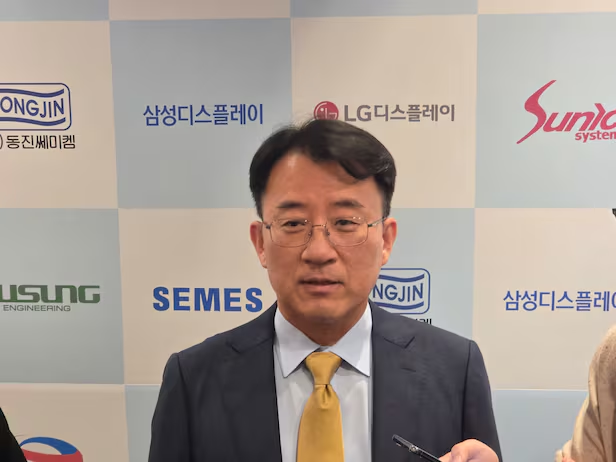
Agitate: This battle isn’t just about market share; it’s also about possessing the best technology. Recently, Lee Cheong, President of Samsung Display, said that Korea’s display industry is in a crisis and that “complacency is not an option.” If South Korea doesn’t keep coming up with new ideas and get help from the government, it could lose its edge in the next generation of display technology, especially in the market for folding phones, which is just starting to grow.
Solutions: Samsung Display’s answer is their big plan to start mass producing 8.6-generation OLED screens in the third quarter of 2026. As a result of this technology, Samsung will be the only company that can make what experts think will be Apple’s first flexible iPhone.
Understanding 8.6-Generation OLED Technology
Samsung’s 8.6-gen OLED represents a significant leap from current 6th-generation technology. The new production line uses larger glass substrates measuring 2290mm × 2620mm—over twice the size of 6th-generation substrates. This dramatic increase in substrate size translates to remarkable production efficiency gains.
A 6th-generation substrate can make about 32 panels for 14-inch computers, but an 8.6th-generation substrate can make up to 88 panels from the same production run. This increase in efficiency has a direct effect on the costs of making OLED displays. This makes them more affordable for customers while increasing manufacturers’ profit margins.
IT devices like laptops, tablets, and most importantly, foldable smartphones are the main goal of this technology. Samsung’s investment of about 4.1 trillion won, or $3 billion, in the new production center in Asan shows that they want to stay at the top of technology..

Features and Advantages of 8.6-Gen OLED Production
Enhanced Production Efficiency
8.6-gen technology’s bigger substrate size has more benefits than just making it possible to make more. Since the cutting is more efficient now, less material is wasted during production, which saves money and supports the environment. For foldable displays in particular, this economy means that the complicated multi-layer structures needed for flexible screens can be made more precisely.
8.6-generation OLED screens keep the best features of OLED technology while making production more consistent. As you might expect from a high-end foldable gadget, these screens have true black levels, bright colors, and quick response times. The changes made to the manufacturing process also improve color accuracy and lower the number of defects in bigger production batches.
Ability to Grow to Meet Future Needs
The market for foldable smartphones is expected to hit $80.26 billion by 2032, growing at a CAGR of 13.60%. Samsung’s 8.6-gen production capacity lets them meet this demand and maybe even offer a few big clients, like the rumored Apple foldable iPhone that will come out in 2026.
Advantages and disadvantages of mass producing 8.6-Gen OLEDs
Advantage
Cutting costs: Because production is now much more efficient, the cost of making each unit is much lower, which makes folding phones easier for regular people to get.
More substrate output means better quality control and more consistent panel properties between batches.
Market Leadership: Samsung is now the world’s leading provider of premium foldable products, even though Apple is about to enter the market. This is because they were one of the first companies to use 8.6-generation technology.
The technology speeds up the creation of next-generation foldable designs, such as screens that don’t wrinkle and materials that last longer.

Disadvantage
Huge Investment: The 4.1-trillion-won investment needs to be profitable for at least 15 years, so tax breaks are very important for its success.
Level of Technical Difficulty: Making an 8.6-gen requires more than 140 complex steps, each of which needs to be carefully controlled and optimized.
Market Risk: Few foldable phones have been bought yet because people are worried about how long they will last and how much they cost.
Chinese companies like BOE are building alternative 8.6-gen facilities, which threatens Samsung’s technological moat.
Real-World Applications and Market Impact
The Apple Factor
Many people in the industry think that Samsung Display is making foldable OLED screens for a “North American client,” which most people think is Apple. This partnership could change the flexible market, since Apple’s entry usually means that new technologies are being used by most people. The rumored iPhone Fold, which is set to come out in September 2026, would use Samsung’s 8.6-generation OLED technology to make its folding screens look great.
Effects on a Larger Market
Samsung’s 8.6-generation technology can be used for more than just foldables. It can also be used in IT products like OLED MacBooks and iPads. This spreads out the demand so that it’s not just driven by smartphones, and it makes OLED the standard for high-quality displays in all kinds of devices. Based on research into the industry, the use of OLED in IT goods will rise from 2% to 14% by 2028, up from 2% to 3% now.
The Competitive Scene
The race to be the best 8.6-gen smartphone gets tougher as Chinese competitor BOE sets a goal date for late 2026 for the start of their own production line. Visionox has already started making a lot of their 8.6-gen line in Hefei, though they are doing it in a few different ways. Samsung’s earlier deployment schedule gives them a key first-mover edge when it comes to getting big client relationships.

How Important Tax Incentives Are
Needs for Government Support
Lee Cheong, President of Samsung Display, said that tax breaks must continue to help the business grow. Since investment recovery cycles in display making tend to be long, the company wants to increase the amount of time that tax credits can be carried forward from 10 years to over 20 years.
Large companies in Korea that invest in strategic technologies like OLED can get tax breaks of 30 to 40 percent from the government. These incentives are very important for competing with China’s manufacturing growth, which is backed by the government and causes temporary oversupply that forces competitors to give up market share.
Problems with Investment Recovery
It costs a lot of money to get into the show business, and it takes more than 15 years to get your money back. This problem is shown by Samsung’s 8.6-generation investment, which cost 4.1 trillion won and needs ongoing help from the government to compete with Chinese companies that get a lot of help from the government.
The business has to pay more to protect technology because there have been 21 cases of display technology leaks in the last five years. Investing in better security and protecting intellectual property are constant costs that tax breaks help cover.
The Global Context of Competition
The way China handles its industrial policy is a threat to the very existence of Korea’s display industry stars. Chinese companies get a lot of help from the government to build up extra capacity, which forces foreign competitors to leave the market. Tax breaks help Korean businesses keep up the investments they need to stay ahead of the curve in technology.
Questions People Ask Often
When will Samsung begin making its OLED screens from the 8.6 generation?
It will start making a lot of things in the third quarter of 2026. Already, samples are being made and results are being improved.
How much better is 8.6-gen technology than what we have now?
There are 88 panels that 8.6th-gen substrates can make for the same 14-inch laptop size, but only 32 panels that 6th-gen substrates can make.
Does this technology mean that bendable phones will cost less?
Answer: Yes, the more efficient production should cut costs, although high-end foldables will undoubtedly stay expensive at first.
Which businesses will use Samsung’s 8.6-generation OLED screens?
Answer: People in the business say that Apple will be one of Samsung’s main users for foldable iPhone screens, but Samsung hasn’t said who those customers are.
What does this mean for the whole show business?
Why is 8.6-gen technology better for Samsung than Chinese competitors like BOE? It speeds up the use of OLED in IT goods.
Why is it so important for this technology to get tax breaks?
It takes more than 15 years to get the money you put into making displays back, and tax breaks help Korean businesses compete with Chinese ones that get a lot of help.
Conclusion: Making the mobile experience of tomorrow
The 8.6-generation OLED effort from Samsung Display is more than just a technological leap forward. It’s also a strategic move to keep South Korea at the top of the display industry while making the next generation of mobile devices possible. Better production speed, lower production costs, and better display quality make Samsung the best partner for companies that make high-end foldable phones.
This plan will only work if the government keeps offering tax breaks. These breaks level the playing field against China’s industrial growth that is backed by the government. As foldable phones become more popular, Samsung’s early use of 8.6-gen technology could help them stay ahead in this new market area while also encouraging wider use of OLED screens in consumer electronics.
With Apple’s planned release of a foldable iPhone in 2026 as a possible push for widespread adoption, Samsung’s 8.6-gen OLED production marks a turning point in the history of display technology. The technology’s effects will go far beyond foldables. It will set new standards for high-quality screens on computers, tablets, and other future devices, and it will keep Korea ahead of the curve in the global display industry.